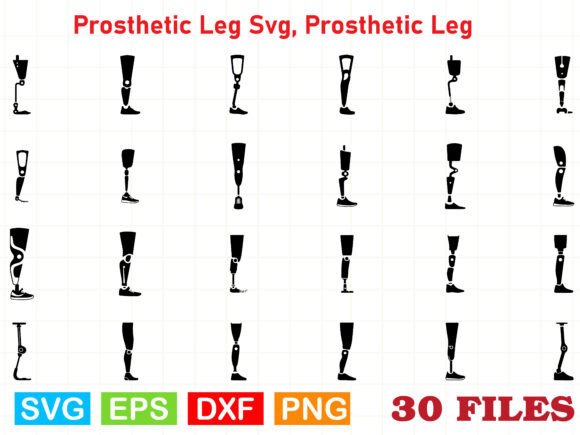
Prosthetic Leg SVG, Prosthetic Leg
A Designer’s First Look: Clean, Respectful, and Quietly Bold
When I opened Prosthetic Leg SVG, Prosthetic Leg for the first time, what struck me wasn’t complexity—it was clarity. This isn’t a cartoonish or overly stylized illustration. It’s a balanced, anatomically grounded silhouette with clean lines and intentional negative space. The design carries quiet dignity—no exaggerated angles, no forced symbolism—and that makes all the difference when translating it into real embroidery. As an illustrator and embroidery designer who’s worked on adaptive apparel lines and inclusive boutique collections, I immediately saw its potential: not as novelty, but as meaningful visual language.
Real-World Use Case: A Custom Embroidered Tote for a Physical Therapy Clinic
Last month, I used Prosthetic Leg SVG, Prosthetic Leg to create embroidered totes for a local physical therapy practice launching a community mobility initiative. We stitched it onto sturdy canvas totes in charcoal thread, centered just below the handle seam. The result? Professional, warm, and instantly legible—even from three feet away. Clients didn’t ask “What is that?” They paused, nodded, and said, “That’s exactly what we needed.” That kind of resonance doesn’t happen with cluttered or ambiguous graphics. It happens when the design respects both craft and context.
Where It Shines in Embroidery Projects
- Custom apparel: Works beautifully on sweatshirt sleeves, chest placements on crewnecks, and back panels of lightweight jackets—especially when paired with minimal text like “Stronger Every Step.”
- Embroidered patches: Its solid outer contour holds up well in satin stitch borders, and the internal shape reads clearly even at 2.5”–3” width.
- Baby and nursery items: On organic cotton onesies or muslin pillow covers, it reads as gentle and hopeful—not clinical—when stitched in soft heather gray or oatmeal thread.
- Holiday and personalized gifts: Stitched onto tea towels or aprons for rehab professionals or amputee advocates, it adds thoughtful specificity without sentimentality.
- Digital product previews: As part of a printable mockup bundle for Etsy sellers, this design stands out because it avoids trend-chasing. It feels timeless—not dated, not disposable.
Where to Proceed Thoughtfully
This isn’t a one-size-fits-all embroidery file—and that’s a good thing. Its strength lies in intention, not universality. Here’s where attention matters:
- Small hoop sizes: Avoid placing it in hoops under 4×4 inches unless you’re willing to simplify or scale down key contours. The knee joint and foot curve need breathing room.
- Textured or stretchy fabrics: On terry cloth towels or ribbed knit caps, use medium-weight cutaway stabilizer and reduce stitch density slightly—especially in the lower leg area—to prevent puckering.
- Dark or heavily patterned backgrounds: Test contrast early. What reads cleanly in black thread on white duck cloth may vanish on navy twill unless you add a subtle outline or switch to metallic silver.
- Curved surfaces (like baseball caps): The straight-line orientation works best on front panels—not curved bill areas—unless you adjust placement to follow the crown’s natural arc.
- Frequent-wash items: For baby clothes or kitchen towels, confirm the stitch density supports durability. Dense fill stitches hold up better than delicate running-stitch outlines alone.
How It Shapes Perception—and Why That Matters
When your customer sees Prosthetic Leg SVG, Prosthetic Leg on a handmade product, they’re not just seeing a graphic—they’re reading your values. Clarity signals professionalism. Restraint signals respect. Consistency across your shop—whether it’s on a patch, tote, or digital embroidery file—builds brand trust. I’ve watched Etsy buyers linger longer on listings using this design because it feels *considered*, not stock. That extra few seconds translates directly into engagement, repeat visits, and word-of-mouth referrals among niche communities.
Practical Designer Notes Before You Stitch
- Always run a test stitch on scrap fabric matching your final project’s weight and weave.
- Check thread color contrast in both natural and artificial light—especially if selling digitally and providing mockups.
- Review stitch density: high-density fills work for stable fabrics; lighter fills or layered satin stitches may suit delicate materials.
- Confirm hoop size compatibility—don’t assume it fits standard 4×4 without checking the bounding box.
- Inspect small details at 200% zoom: are corners sharp? Does the ankle taper cleanly? If not, minor digitizing tweaks may be needed.
- Test black-and-white versions—many buyers preview embroidery in grayscale mockups.
- Use appropriate stabilizer: cutaway for knits, tear-away for stable wovens, fusible for lightweight linens.
- Verify licensing: since this is listed as a Graphics file in the Illustrations category, confirm whether commercial use of finished embroidered products is permitted before listing on Etsy or in your small shop.
Final Thought: Design With Purpose, Not Just Placement
Prosthetic Leg SVG, Prosthetic Leg isn’t flashy—but it doesn’t need to be. In a market saturated with generic icons and rushed clipart, this design earns its place through quiet precision. It works because it was made to be *used*, not just displayed. Whether you’re stitching a single custom gift or building a cohesive line of adaptive lifestyle products, this machine embroidery design supports authenticity—not gimmicks. And in today’s handmade economy, that’s the most valuable thread of all.