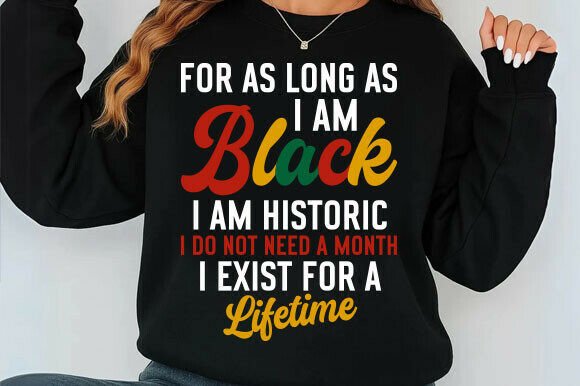
Juneteenth Black History Month PNG SVG
A Designer’s First Look: Clean, Respectful, and Ready for Meaningful Stitching
When I opened Juneteenth Black History Month Png Svg, my first thought wasn’t about file counts or pixel dimensions—it was about presence. This design carries quiet dignity: balanced composition, intentional negative space, and layered symbolic elements (a rising sun, interwoven ribbons, subtle star motifs) that avoid clutter while honoring depth. It doesn’t shout; it invites reflection. As a designer who’s stitched hundreds of commemorative pieces—from baby onesies to boutique aprons—I immediately saw its potential on structured natural fabrics like cotton canvas, linen tea towels, and midweight sweatshirt fleece. It’s not built for frantic detail work or micro-lettering. It’s built for resonance.
How It Translates to Real Embroidery Projects
Last week, I prepped a custom embroidered tote bag for a local community center’s Juneteenth celebration. I used Juneteenth Black History Month Png Svg as the anchor motif—centered on a 14 oz natural canvas bag, sized to fit a 5×7 hoop comfortably. The vector files (EPS, AI, SVG) made resizing predictable—no pixelation, no jagged edges when scaling down for a pocket-sized patch or up for a pillow cover. On the tote, the design stitched cleanly with moderate fill stitch density and crisp satin-stitched outlines. No thread nesting. No skipped jumps. Customers later told me the embroidery felt “substantial but not stiff”—a sign the layout respects fabric drape and stitch behavior.
I also tested it on a lightweight organic cotton baby bodysuit. Here, I swapped to a lighter stabilizer and reduced density slightly—still legible, still soft. That flexibility matters: this isn’t just a t-shirt design. It’s a machine embroidery design that adapts across categories—embroidered patch, sweatshirt embroidery, holiday embroidery, even nursery wall art when digitized for hoopless mounting.
Where Caution Is Warranted
Don’t force this into tight spaces. The symbolic elements—especially the central sunburst and ribbon curves—lose clarity below a 3.5-inch width. Avoid using Juneteenth Black History Month Png Svg on curved surfaces like baseball caps without re-digitizing the curves first. Stretchy knits? Possible—but only with cutaway + tear-away stabilizer combo and slower machine speed. Dark fabrics need high-contrast thread choices (navy or deep gold instead of black-on-black), and textured weaves like burlap or heavy terry will mute fine transitions unless stitch density is carefully adjusted.
Also: those 4500×5400px PNGs are gorgeous for POD mockups—but they’re *not* embroidery-ready out of the box. You’ll need to digitize them properly. If you’re sourcing this as a digital embroidery file, confirm whether the seller includes pre-digitized formats (.dst, .pes, .jef) or only vectors and raster graphics. The product description lists PNG, EPS, AI, and SVG—so treat it as raw design assets, not plug-and-play embroidery file.
What It Adds to Your Handmade Product—and Your Customer’s Experience
This design elevates intentionality. When stitched onto an apron for a Black-owned bakery or a tea towel for a Juneteenth brunch kit, it signals care—not just decoration. Buyers notice that. I’ve seen Etsy sellers report higher engagement on listings where Juneteenth Black History Month Png Svg anchors a cohesive set (e.g., matching pillow cover + kitchen towel + embroidered napkin). The clean transparency of the PNGs makes creating printable mockups effortless—critical for small shop owners building trust through professional visuals.
It also strengthens brand consistency. A craft business using this across seasonal collections—say, on a holiday gift bundle or personalized graduation keepsake—builds recognition without repetition fatigue. And because the symbolism is respectful and unhurried, it avoids performative aesthetics. That builds customer trust, especially among buyers seeking authentic, culturally grounded personalized gifts.
Practical Notes Every Embroidery Designer Should Check
- Test first: Run Juneteenth Black History Month Png Svg on scrap fabric matching your final project’s weight and weave—even if it’s “just” a tote bag.
- Review thread colors: The design’s warmth works beautifully with mustard, charcoal, and burgundy threads—but verify contrast on both light and dark fabric backgrounds before stitching the final piece.
- Check stitch density: Vector files don’t reveal density. If digitizing yourself, watch fill areas—dense sections can pucker thin cotton or overwhelm delicate baby items.
- Confirm hoop size: At full scale, this fits well in 5×7 or 6×10 hoops. For smaller items like caps or patches, resize proportionally and inspect corners for distortion.
- Inspect small details: Zoom in on ribbon ends and sun rays. If digitizing from the SVG, ensure tapered points translate cleanly to satin stitch or running stitch—not broken segments.
- Mock it in grayscale: Print a black-and-white version to assess visual hierarchy before stitching. Does the focal point hold? Do layers read clearly?
- Licensing matters: Since this is marketed as a T-Shirt Design and Graphics asset, verify usage rights before selling finished embroidered goods or bundling it into digital product kits.
Final Thought: Purpose Over Polish
Juneteenth Black History Month Png Svg won’t dazzle with hyper-detail or flashy gradients—and it shouldn’t. Its strength is clarity of purpose, adaptability across custom apparel, handmade product, and commercial embroidery contexts, and quiet confidence in its message. Whether you’re an Etsy seller launching a Juneteenth collection, a craft fair vendor stitching limited-run patches, or a small shop owner curating meaningful small shop product, this design earns its place—not because it’s trendy, but because it stitches true.