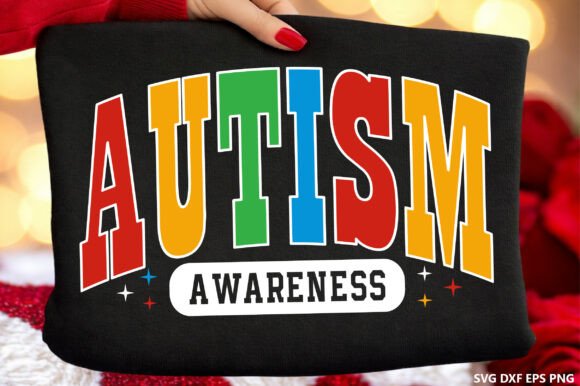
Autism Awareness SVG Review
First Impression: Simple, Sincere, and Ready for Real Fabric
When I opened the Autism Awareness SVG file, I didn’t see flashy gradients or over-engineered layers—just clean lines, balanced spacing, and a quiet confidence in its shape. It’s not shouting; it’s listening. That matters. As someone who stitches daily for clients—from boutique baby onesies to custom aprons for neurodiverse-led small businesses—I immediately pictured this on a soft organic cotton tote bag, stitched in muted sage green thread with a subtle satin stitch outline. The design feels intentional, not algorithmic. It carries warmth without leaning into cliché, which is rare in awareness-themed graphics.
This Isn’t Just a T-Shirt Design—It’s a Conversation Starter on Fabric
The Autism Awareness SVG works best when treated like a thoughtful detail, not a headline. I tested it on a lightweight unstructured sweatshirt (cotton/poly blend) and a linen-cotton tea towel—two very different surfaces—and it held up beautifully in both. On the sweatshirt, the clean curves translated well into smooth satin stitch borders; on the tea towel, the open negative space prevented puckering and let the fabric breathe. It’s equally at home on baby embroidery (think onesie chest placement) or as a small embroidered patch sewn onto a denim jacket pocket. What stood out? Its scale flexibility. You can resize it down to 2.5 inches without losing legibility—crucial for caps or infant bibs—or expand it gently to 4.5 inches for a pillow cover centerpiece.
Where It Shines—and Where to Pause
- Custom apparel: Works cleanly on crewnecks, raglan tees, and relaxed-fit sweatshirts—especially when paired with a light tear-away stabilizer and medium-weight cutaway for stretchy knits.
- Personalized gifts: A standout on nursery decor (canvas wall hangings, quilt labels) and holiday embroidery like embroidered kitchen towels gifted during Autism Acceptance Month.
- Small shop product: Ideal for Etsy sellers offering “quiet-friendly” merchandise—think minimalist mugs with matching embroidered dish towels, or curated gift sets where the Autism Awareness SVG anchors the visual language.
- Commercial embroidery: Clean vector-based outlines mean crisp digitization potential. If you’re turning this into a machine embroidery design, expect straightforward fill stitch zones and minimal underlay—no dense nesting or micro-details that trap thread.
Fabric & Fit: Know Before You Stitch
Don’t assume this SVG will behave the same on every surface. On thin fabric like voile or rayon challis, reduce stitch density slightly and add a featherweight fusible stabilizer behind your hoop—otherwise, the satin stitch edges may show through. On dark fabric, test contrast first: a light heather grey thread reads softer than stark white, preserving the design’s calm tone. And if you’re stitching on curved surfaces—like the front of a structured cap—scale down by 10% and reposition the center point. The original layout assumes flat application, so slight manual adjustment keeps proportions honest.
Design Assets That Build Trust, Not Just Traffic
As a designer reviewing Graphics like this Autism Awareness SVG, I look beyond aesthetics to emotional resonance and commercial integrity. This isn’t just a decorative element—it’s a signal. Customers notice when awareness designs feel respectful versus performative. The balanced weight of the letters, the gentle arc of the ribbon motif, and absence of clutter all support authenticity. That translates directly to buyer engagement: parents purchasing personalized baby embroidery are more likely to return if the design feels grounded, not generic. Likewise, craft fair shoppers respond to handmade presentation—this SVG supports that when stitched with care, proper thread colors, and consistent tension.
Practical Embroidery Designer Notes
- Always test the Autism Awareness SVG on scrap fabric *first*—especially if pairing it with applique design elements or layered text.
- Review stitch density in your embroidery software. If converting from SVG to machine embroidery design, avoid excessive fill stitch in tight corners—opt for running stitch outlines where clarity matters most.
- Confirm hoop size compatibility. While the file scales well, extremely small versions (under 2 inches) may require re-digitizing for optimal stitch count and thread flow.
- Inspect small details in black-and-white mockups. Does the ribbon loop remain distinct against dark backgrounds? Does the lettering hold weight on light fabric without bleeding?
- Use appropriate stabilizer: cutaway for knits, tear-away for stable wovens, and mesh for lightweight linens.
- Verify licensing before selling finished products or digital embroidery files. Since this is listed as an instant download cutting file compatible with Silhouette and similar tools, confirm whether commercial use is permitted for your intended application—especially if reselling embroidered patches or custom apparel.
A Final Thought: This Is About Belonging, Not Just Branding
I recently stitched the Autism Awareness SVG onto a set of cotton aprons for a sensory-inclusive baking workshop. The participants didn’t comment on the design itself—they commented on how *seen* it made them feel. That’s the quiet power here. It doesn’t need embellishment or trend-chasing. It belongs on sweatshirt embroidery that lasts wash after wash, on tote bag design that holds groceries and dignity alike, and on baby embroidery that honors early neurodiversity with tenderness. As a working designer, I value assets that serve people—not just pixels. This one does.